Honoring the men, their memory, and their mission



DESTROYERS

Subscribe
Abele
Drexler
Porter
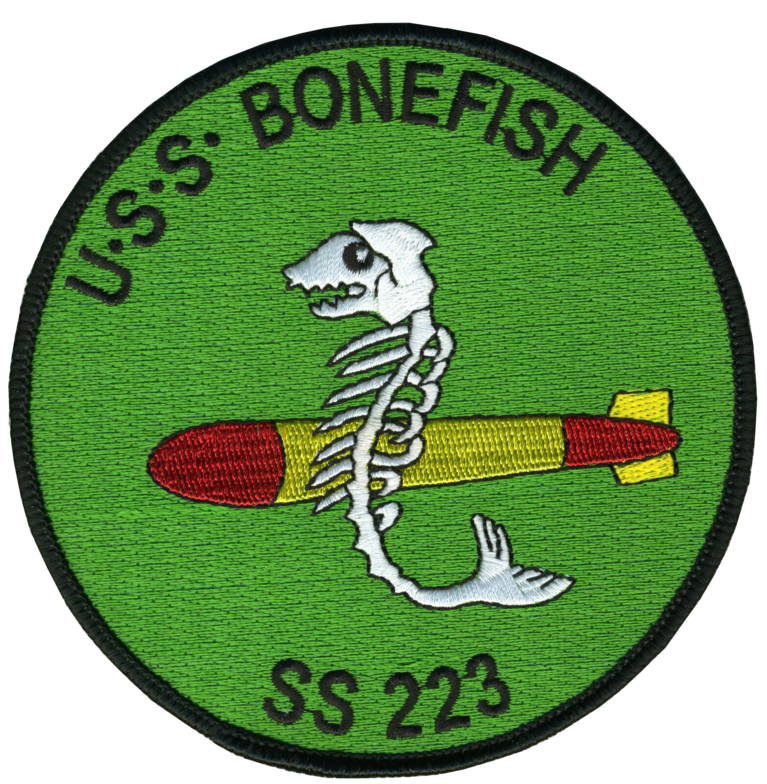
USS Drexler DD-741
USS Drexler's Final Mission
On January 23, 1945, the USS Drexler departed Norfolk, tasked with escorting the Bon Homme Richard to Trinidad. After completing this assignment, Drexler continued her voyage and arrived in San Diego by February 10. Three days following her arrival, the ship set out for Pearl Harbor, where she engaged in antiaircraft and shore bombardment drills until February 23. Afterward, Drexler assumed escort duties, heading to Guadalcanal and then to Ulithi, which served as the staging point for the upcoming Okinawa campaign.
Leaving Ulithi on March 27, 1945, Drexler headed toward Okinawa, where she was assigned to a radar picket station. On May 28, at approximately 7:00 AM, Drexler and the nearby USS Lowry came under attack from two kamikaze aircraft. The first attacker was shot down through the combined efforts of both destroyers and supporting planes. The second kamikaze attempted to strike Lowry but crashed into Drexler instead, resulting in a complete loss of power and igniting extensive gasoline fires. In spite of severe damage, Drexler's crew managed to keep up defensive fire, assisting in downing two additional enemy planes that approached in the aftermath of the crash.
At 7:03 AM, a twin-engine "Frances" P1Y1 bomber struck Drexler, causing the vessel to roll over and sink rapidly—within less than a minute. Due to the swift sinking, the ship suffered significant casualties: 168 crew members lost their lives and 52 were injured, with the captain among those wounded.
Who Sank the Destroyer Drexler?
In the early morning of May 28, 1945, six twin-engine kamikaze planes approached Radar Picket Station 15 off Okinawa, where destroyers USS Drexler and USS Lowry were providing early warning coverage for the main American fleet. Together with Combat Air Patrol (CAP) fighters, the two ships shot down four of the six planes, but the remaining two struck Drexler in quick succession, sinking her in under a minute. Of her crew, 158 died and 199 survived. For decades, members of the USS Drexler Survivors Reunion Association remained curious about exactly which planes — and which pilots — had sunk their ship.
Conflicting Records
The investigation was complicated by widespread disagreement among official Navy records and survivor accounts. The Lowry's deck log identified all attacking planes as "Dinahs" (Ki-46 reconnaissance aircraft). Several survivors believed they were Betty bombers. Multiple official Navy reports, including Captain Wilson's Action Report, identified the two planes that hit Drexler as Frances bombers. A few accounts mentioned Nicks, but only as planes shot down by CAP — not as the ones that struck the ship. This inconsistency made the research challenging, as no single American source presented a clear, unified picture.
Evaluating the Candidates
Each plane type can be largely ruled out on historical grounds. Dinahs were almost never used in kamikaze attacks — the Japanese Army used only seven throughout the entire war, with the last ones flying on May 14, 1945. Betty bombers were never used to directly crash into ships; their kamikaze role was exclusively as mother planes carrying rocket-powered Ohka glider bombs, and American fighters typically shot them down before they could deploy. Frances bombers were used extensively in kamikaze operations, with over 100 having made sorties by this point in the war, but Japanese records confirm they were last used for kamikaze attacks on May 25, 1945 — three days before Drexler's sinking.
That leaves the Nick (Ki-45 Army Type 2 Toryū Fighter). Japanese special attack records show that only one squadron of twin-engine planes made sorties on May 28, 1945: the 45th Shinbu Squadron, which launched nine Nicks from Chiran Air Base in southern Kyushu at 0455 that morning. The two planes struck Drexler at 0654 and 0702 — consistent with an approximately two-hour flight time from Chiran to the picket station. One of the CAP pilots, Lt. Robert F. Bourne, recorded in his flight log that he "shot down 2 Nicks," and later confirmed his gun camera footage showed a Nick. Additionally, Nicks had well-protected fuel tanks, which explains survivor accounts of the second plane absorbing tremendous gunfire without exploding — something a Betty, notorious for catching fire easily, could never have done. The fact that Lowry's crew identified the planes as Dinahs further supports the Nick conclusion, as the two aircraft were similar in size and shape.
Of the nine Nicks that departed Chiran, one crashed into the sea en route. Six planes arrived at Radar Picket Station 15 — consistent with American accounts — while the remaining two likely separated from the group for unknown reasons. Two of the six struck Drexler; the others were shot down by CAP or shipboard gunners.
The 45th Shinbu Squadron
The 45th Shinbu Squadron, nicknamed "Kaishin" (cheerful spirit), was formed on February 8, 1945. Its commander was First Lieutenant Hajime Fujii, 29, who served as radio operator/gunner in the lead plane rather than as a pilot. The squadron trained at multiple air bases across Japan before flying to Chiran on May 27 for their final mission the next morning. Tragedy had already struck the unit: a radio operator died in a nighttime training accident on April 28, and his remains were carried aboard the mission in a white box placed in the seat he would have occupied.
Fujii's personal story adds a profound dimension to the investigation. In December 1944, his wife Fukuko drowned herself and their two young daughters in a nearby river. She had done so deliberately, knowing of her husband's fervent desire to join the special attack corps and die for his country — freeing him from family obligation. The Army accepted Fujii's petition to join the tokkōtai only after her death, and he was named squadron commander. He died alongside nine men aged 18 to 21 in the early morning of May 28, 1945.
Conclusion
After more than 60 years of uncertainty, a comparison of American and Japanese wartime records points clearly to two Nicks from the 45th Shinbu Squadron as the planes that sank Drexler. This conclusion contradicts every official U.S. Navy record, yet is better supported by the totality of evidence than any alternative. For Drexler's survivors, learning the identity of the men who sank their ship — and the tragic circumstances surrounding them — brought a long chapter of historical uncertainty to a close.